Access Control and Escape Door Compliance: What You Need to Know
9th December 2025
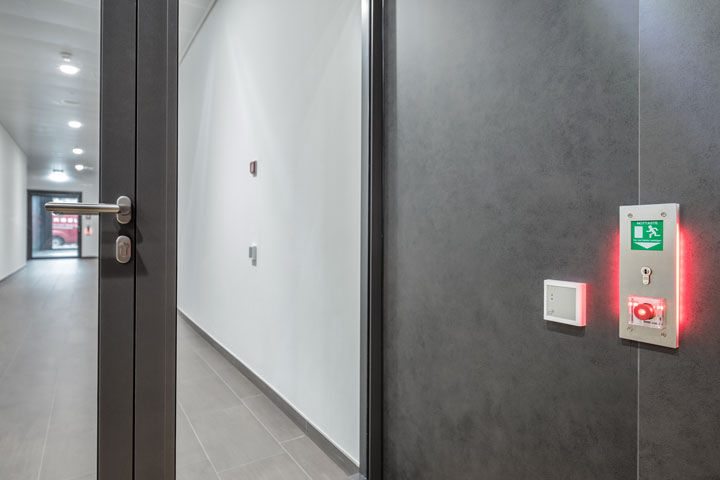
Ensuring the safety and security of building occupants is a core responsibility for any organisation. In the UK, access control systems must balance two priorities: keeping unauthorised individuals out and allowing people to escape quickly and safely during an emergency.
With updated standards and the upcoming implementation of Martyn’s Law, access control and door compliance have become even more important. As an NSI Gold certified company, T H WHITE Energy, Fire & Security designs, installs, commissions and maintains access control systems that meet the latest technical and regulatory requirements — including the NSI Code of Practice NCP 109 (Issue 4).
This guide explains what you need to know to stay compliant.
Who Are the NSI and Why Compliance Matters
The National Security Inspectorate (NSI) is the UK’s most trusted and respected UKAS-accredited certification body for the fire and security sectors. Being NSI Gold approved demonstrates that T H WHITE operates to the highest technical standards and is regularly audited to ensure compliance.
For access control, this means following NCP 109, the industry standard for designing and installing compliant systems in line with British Standards and building regulations.
Key Considerations for Access Control Compliance
Modern access control must do more than restrict entry. It must support safe escape and fully align with fire risk assessments and evacuation strategies.
- Balancing Security with Safe Escape
A compliant system must:
- Prevent unauthorised access
- Enable safe exit at all times
- Withstand tampering
- Fail unlocked or locked under certain conditions
The Responsible Person, as defined in fire safety legislation, determines escape strategies and door classifications through a fire risk assessment.
- Preparing for Martyn’s Law
The Terrorism (Protect Duty) Bill, known as Martyn’s Law, requires responsible persons to consider both emergency escape and secure lockdown scenarios.
Understanding Door Classifications
Under NCP 109, doors must be classified based on their use:
- Non-escape doors
- Emergency escape doors
- Panic escape doors
Hardware Requirements Under NCP 109
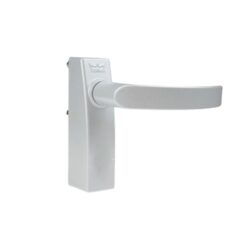
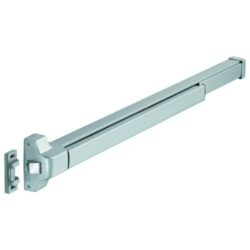
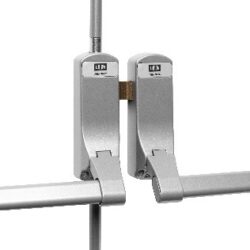
NCP 109 aligns exit hardware with relevant British Standards. The choice of hardware depends on door classification.
| Door Type | Locking | Exit Operation |
| Non-escape | Any suitable | Any suitable |
| Emergency escape | BS EN 179 | Lever handle |
| Panic escape | BS EN 1125 | Push bar |
Important: Magnetic locks are no longer compliant on emergency or panic escape doors unless part of a fully tested BS EN 13637 system.
BS EN 179 overview | BS EN 1125 overview | BS EN 13637 overview
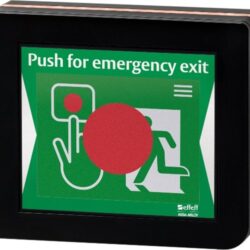
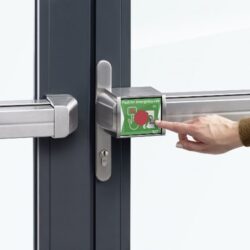
What Is ‘Read Out’ Access Control?
A BS EN 13637 compliant system enables:
- Controlled egress
- Short managed delay (typically 15 seconds) for emergency/panic escape
- Audible warning before release
Designing for Lockdown and Fire Integration
Modern access control systems can integrate:
- Fire alarm signals
- Lockdown scenarios
- Zoned release
- Staff override controls
Systems relying solely on maglocks may create vulnerabilities — e.g., an intruder activating a manual call point could release all maglocks linked to the fire alarm.
Existing Installations
T H WHITE continues to maintain systems installed under previous NCP 109 versions. Any new installation or major retrofit must comply with NCP 109 Issue 4.
Next Steps: Ensuring Compliance
Staying compliant with access control regulations is essential. T H WHITE Energy, Fire & Security can support you with:
- Compliance reviews
- Full access control design
- Door hardware assessments
- Installation and commissioning
- Fire alarm integration
- Martyn’s Law preparation
Contact Us
For expert advice or to arrange a free site visit:
01380 726656 | efs@thwhite.co.uk | efs.thwhite.co.uk